Families seldom plan these choices much in advance. More frequently, an autumn, a brand-new medical diagnosis, or the sluggish creep of caregiver burnout brings the inquiry to the table: should we look at assisted https://beehivehomes.com/locations/san-antonio living, or can we arrange at home senior care and keep Mama where she is? I have sat with lots of households at that crossroads. The best option depends much less on an abstract preference and even more on concrete realities, like the shower room format, medicine complexity, night wandering, and the state of the family's endurance and budget.
What adheres to is a based comparison, drawn from genuine instances and the type of trade-offs individuals only identify as soon as they are in the thick of it. There is no one-size solution. There are, nonetheless, patterns, cost varieties, and indication that help you decide with eyes open.
What "assisted living" truly provides, and what it does n'thtmlplcehlder 6end. Assisted Living neighborhoods are made for older grownups who require aid with everyday activities but do not call for the constant medical oversight of an assisted living home. In practice, that means help with bathing, clothing, brushing, toileting, and medication management, plus dishes, housekeeping, and activities. A lot of areas staff with caregivers and med techs around the clock, with a nurse on site or on-call. The house is personal, frequently a workshop or one-bedroom, with an easily accessible washroom and emergency pull cords. The culture varies extensively. Some seem like a dynamic condo with a service overlay. Others are quieter, with more medical undercurrents. There are restrictions that households often miss during the tour. Assisted living is not one-on-one treatment. Staff-to-resident proportions could appear like one caregiver for 10 to 15 locals during the day, extending thinner during the night. If your father needs somebody physically next to him to avoid drops every time he stands up, you will certainly either supplement with an exclusive caregiver or take into consideration a greater degree of care. Healthcare is encouraging, not intense. The group will certainly coordinate with outdoors carriers, but they are not an experienced nursing facility. If insulin application is complicated or the oxygen demands are unpredictable, the fit might wobble. The big advantage is predictability. Meals arrive whether you go shopping or not. The shower is roll-in and the water temperature level managed. A person is awake at 2 a.m. if an alarm sounds. Social contact takes place without a cars and truck adventure. Family members often report that the concern dial refuses a few notches, also if the very first month is bumpy. What at home senior treatment can do wonderfully, and where it strains
In-home Senior Care spans from a few hours a week of buddy sees to 24-hour protection. Nonmedical home treatment firms send caretakers who assist with bathing, clothing, light housekeeping, dishes, transportation, and guidance. If your mother has strong psychological roots in her home, if a cherished pet dog sleeps at her feet, if the garden is her therapy, staying may protect routines that stabilize state of mind and feature. For those with early amnesia, acquainted surroundings decrease anxiety and complication. For those recuperating from surgical treatment, home health solutions, which are medical and generally covered by insurance policy for a time, can layer in skilled nursing and treatment visits.
The stress and anxiety factors show up with complexity and time. If requirements are recurring, like 2 showers a week and a few rides to visits, at home treatment shines. If needs are scattered throughout the night and day, the expenses add up quick unless the family covers numerous hours themselves. Nighttime issues, like sleeplessness, roaming, and sundowning, transform the calculus. An over night caretaker is a video game changer, yet paying for seven nights a week at private-pay rates adds up to a mortgage-sized expense. Houses themselves can resist the job: slim corridors, stairways without rail, a tub that demands a climb, toss rugs that launch falls. Retrofitting can function wonders, but some designs battle you.
Then there is the human element. The best firms strive at uniformity, however caregivers have lives, illnesses, and turnover. Even a secure case normally includes replacements. Some elders adapt. Others reject the concept of a "stranger" in your house and screw up the setup. Families often discover themselves as schedulers-in-chief, bargaining protection, loading voids, and fielding last-minute texts.
About the money: realistic ranges and what drives them
Families should have ordinary numbers. Prices vary by area, yet the auto mechanics are consistent throughout the United States.
Assisted Living generally bills a base monthly rent plus tiered treatment fees. In several markets, the base for a studio runs in between 3,500 and 5,500 bucks each month, with one-bedrooms climbing from there. Treatment levels layer on 500 to 2,500 dollars or even more, relying on demands like help with transfers, incontinence, or drug management. Memory Care, which is a protected setting tailored to dementia, commonly begins higher, frequently 6,000 to 9,000 dollars monthly, in some cases much more in significant metro locations. Anticipate an upfront neighborhood charge, often equivalent to one month's rental fee or a flat 2,000 to 5,000 dollars. Cable television, phone, and often individual washing might be additional. The elevator pitch is extensive, yet checked out the service strategy. Escorts to dishes, nightly checks, or two-person transfers can add cost.
In-home care is normally billed per hour, with a common agency minimum of 3 to 4 hours per check out. Per hour prices in many areas land between 28 and 40 bucks for nonmedical care, higher in coastal cities. Live-in plans, where a caregiver sleeps on site, are billed every day, commonly 300 to 450 bucks, however real 24-hour conscious care is billed per hour, not as live-in, since nobody can securely work all the time. For a rough budget, eight hours a day, seven days a week at 32 bucks per hour has to do with 7,168 bucks monthly. Twenty-four-hour coverage can surpass 20,000 bucks monthly with companies. Hiring privately can be cheaper, however you come to be the company and take on pay-roll tax obligations, employees' payment exposure, vetting, and backup coverage.
Insurance assists in restricted ways. Medicare does not spend for long-term custodial treatment, whether in your home or in assisted living. It will certainly cover intermittent home health and wellness after a qualifying demand, yet that is time-limited and clinical, not bathing and food preparation. Long-lasting treatment insurance policy, if purchased years back, can subsidize either establishing, though policies vary on everyday benefit caps and removal periods. Professionals' Aid and Participation can supply several hundred to over a thousand bucks monthly for qualified veterans and making it through partners. Medicaid can cover assisted living or at home solutions through waivers in several states, yet gain access to depends on both financial certification and program ability. Waiting listings prevail. Before you think help is difficult, ask a neighborhood aging solutions office or a respectable senior treatment consultant to map what exists in your state.
Memory look after parents: when mental deterioration alters the decision
Dementia is where the lines in between settings issue. Families usually ask whether to keep a moms and dad at home with a friend, or transfer to Memory Treatment. The answer hinges on safety, behavior, and caregiver stress. Early, a few hours a day of cueing and companionship in the house might be excellent. As symptoms progression, 2 things usually push the decision: evening straying and unpredictable habits. I have dealt with families whose enjoyed one turned on the oven at 3 a.m., went out the front door, or became dubious and literally immune to help. In those cases, a Memory Care community provides a protected setting with concerned doors, staffing that anticipates habits and recognizes redirection methods, and structured days that wet agitation.
That said, Memory Care is not a magic stick. The environment matters. Some communities are stimulating in a great way, with quiet rooms for decompressing. Others really feel overwhelming. If your moms and dad is a long-lasting introvert, a little home-like setup, usually called a property treatment home or board-and-care, can be gentler than a 60-apartment unit. If Dad still walks a mile a day and loves the backyard, a fenced garden in the house might maintain him longer than a locked corridor. Be cautious of the gap in between advertising and method. Ask exactly how they handle a local who rejects a shower, or one who loads a bag daily to "most likely to work." The answer tells you if staff are trained in dementia care or winging it.
The lived experience: exactly how it feels day to day
Numbers and services issue, but daily life is more granular. Right here are scenes I have actually seen play out.
A retired nurse, widowed, with moderate Parkinson's and near-perfect exec function, relocated to assisted living since she was tired of the home work. She grew. She put on 5 required pounds due to the fact that she stopped skipping lunch. She tackled the informal librarian duty in the area. The trade-off she accepted was much less control over timing. Dinner reached 5:15 p.m., not 7 p.m., and a various caretaker could aid on Tuesday than on Wednesday. She liked the predictability of help greater than the freedom of being alone.
A couple in their late eighties intended to stay at home. He had dementia, she did not. They attempted company caregivers 3 days a week and loved 2 of the 4 that turned. The 3rd was adequate, the fourth had a perfume that triggered headaches. They were happy, up until he began waking at 2 a.m. repeatedly, setting off movement sensing units and surprising her conscious. They included over night care 2 nights a week. After a month, she admitted the various other five nights were wrecking her rest and heart rhythm. Relocating him to Memory Care allowed her to be his better half and advocate again, not his exhausted warden.
A kid urged his mother would not leave her house. She dropped in the bathroom. The tub had a 17-inch side, difficult to step over securely despite grab bars. They mounted a walk-in shower and a portable showerhead, plus a raised toilet seat with arms. A part-time caretaker came 4 early mornings a week to aid with bathing and to prep meals for the day. They added a drug dispenser with timed alarm systems because her pill count was a mess. It worked, since her demands were gathered in the early morning and she rested in the evening. The investment in the restroom paid for itself compared to a move.
These are not universal outcomes, however they highlight the hinge points that matter: timing of requirements, over night habits, environment, and medicine complexity.
Safety, supervision, and mistake rates
Care has an error price. That may appear rough, however it is straightforward. In assisted living, one of the most common errors are delays. Your mother presses a telephone call pendant, and it takes 10 minutes for somebody to get here since an additional homeowner fell. The most awful occasions I have seen in assisted living typically entail homeowners who required more guidance than the version can supply, like an unpredictable pedestrian who insists on going alone to the washroom after twelve o'clock at night. Supplementing with personal one-to-one treatment inside the neighborhood is an option, however it includes cost.
At home, the errors often include disparity. A caregiver might disappoint up on time, leaving your father alone longer than prepared. A relative might presume the agency caregiver dealt with the midday pills when the job was no longer on the treatment strategy. The physical setting contributes, also. A rosy-cheeked home can conceal tough edges, like scatter rugs, low lights, and staircases with no contrasting tape on the edge. You can reduce these threats through easy fixes. Brighten hallways at night with motion-sensing lights. Eliminate rugs or tape them down. Set up a shower chair, not just grab bars. Add a bed alarm system if wandering is a risk, yet take into consideration whether it will alarm and create an autumn. Calibrate interventions to the person.
Social life: loneliness, stimulation, and control
Social contact underpins health. Helped living neighborhoods provide an instantaneous community. The calendar typically consists of exercise classes, music, lectures, crafts, and outings. Whether your moms and dad takes part is another tale. Some sign up with whatever. Others prevent team tasks and still gain from casual interactions in corridors and dining rooms. Isolation is possible in any type of setup, however it is more challenging to be completely alone in assisted living if dishes are shared.
At home, social life needs logistics. For seniors who drive safely or have family members close by, it can be abundant. For those that surrendered the automobile and reside in a rural cul-de-sac, days can extend slim. Senior citizens that say they choose home occasionally suggest they choose control. Consider hybrid remedies: grown-up day programs a few days a week, church groups that organize experiences, or a friend caretaker known for drawing individuals out. If your mom was the one that constantly held Thanksgiving, shedding that function can hit identification hard. Invite her to keep roles, scaled to power. Ask her to be "primary cup" for a family dish evening or host a tea with a neighbor and the caregiver supporting in the kitchen.
The family members caretaker's bandwidth
Care plans live or die on the power of family caregivers. I have actually seen adult children develop schedules deserving of an air traffic controller, just to wear out by month 3. Be honest concerning that will certainly do what, when, and for the length of time. If you are the only kid in the area and you likewise have a full time task and two teens, a plan that counts on you covering most evenings will certainly break down. It is not an ethical failing, it is math.
Respite issues. Assisted living and Memory Treatment can act as break, even if the lasting plan is home. A short remain of 2 to four weeks after a hospitalization allows the senior restore toughness while you collect yourself and adjust your home. Some assisted living areas offer furnished reprieve rooms. Insurance coverage rarely spends for this, however the small premium over the month-to-month rate can be worth it for the lift it offers the household system.
Red flags that suggest you need to lean one method or the other
Here is a short, sensible list of tipping-point signs, collected from years of evaluations and household meetings.
- Consider assisted living or Memory Treatment if requirements are constant throughout the night and day, if two-person transfers are needed, if roaming has taken place, or if caregiving is rotating amongst exhausted family members with no alleviation in sight. Consider in-home treatment if aid is clustered at predictable times, if the home can be ensured with modest changes, if a spouse or grown-up child lives neighboring and is willing to collaborate, and if regimens at home assistance well-being greater than a relocation would.
If you are still stuck, attempt a time-limited experiment. Commit to 60 days of boosted at home support, with a clear schedule and backup strategy if nights end up being unsafe. Or test an assisted living break stay, with a reserved right to return home if it does not fit. Choices feel lighter when you are not claiming they are forever.
Costs past cash: autonomy, identity, and friction
Every selection invests, not simply dollars. Relocating to assisted living invests some freedom. Meal times are established, and there is a flatmate down the hall that plays the TV a little loud. Staying at home invests energy and unpredictability. If a caregiver no-shows, you scramble. If Mother rejects a shower for 5 days, you might become the crook. It prevails for adult children to predict their very own choices. Pause and ask your moms and dad what issues most daily. Some will certainly state personal privacy. Others will claim security. A few will certainly shock you with humor. One papa informed me, Park me where the coffee is warm and the newspaper arrives before 7 a.m. That, he claimed, is civilization.
Consider the shift costs. Steps are hard, yet they are likewise finite. The initial 2 weeks in assisted living can be rocky as new routines resolve. At home care has a slower burn. The rubbings are smaller yet duplicated: scheduling, secrets, guidelines left on the counter, introductions to new caregivers.
How to veterinarian quality: questions that expose the truth
Tours and sales brochures inform component of the tale. Direct concerns, asked without apology, disclose more.
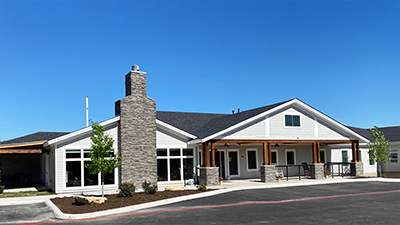
- At an assisted living or Memory Care area, ask about over night staffing numbers, the typical response time to necklace phone calls, and how typically treatment plans are updated. Meet the registered nurse, not just the sales supervisor. Request for instances of just how they managed a fall last week and a homeowner who refused meds. Eat a meal in the dining room and watch just how staff talk with residents. Stand near the elevators at shift adjustment, not just during the excursion hour. For at home care, ask the agency about backup insurance coverage, just how they deal with a late or lacking caretaker, and whether you meet the caretaker before the initial change. Clarify that educates on the treatment plan and how modifications are interacted. Verify their employees are W-2 staff members covered by employees' payment. If they suggest live-in care, ask how many uninterrupted hours the caretaker will certainly sleep and who covers during those hours if your moms and dad needs help.
You are not being tough. You are doing due persistance for Senior Care.
The special case of assisted living for a moms and dad at a distance
Adult kids who live far away face extra stress. If you are a two-hour flight from your mom, at home care requires a neighborhood factor person, paid or household. Aided living can provide the oversight you can not supply from afar, yet it is still worth arranging a neighborhood supporter. Consider employing a care supervisor, in some cases called a senior citizen treatment manager or aging life treatment specialist, for regular check-ins and to attend treatment plan conferences. A regular monthly report with images and notes is gold when you can not drop in.
Distance also affects emergency situations. If your papa remains in assisted living, a loss activates a call from the nurse, and they set up the hospital transfer. If he goes to home with a caretaker, the agency trains for emergency situations, however the caregiver may be alone and rattled. Both scenarios can function. The distinction is that collaborates in the initial disorderly hour.
Building a sensible spending plan and timeline
Most families take too lightly two points: the length of time the demand will certainly last and just how swiftly prices can intensify with intricacy. Map a base situation and a stretch case. If the base case is two years at 6,000 bucks per month for assisted living, ask what happens if it comes to be four years with memory treatment costs pushing the total to 8,500 bucks. If the home treatment base case is 30 hours a week, cost 60 and 80 hours. If the numbers break the plan, bring that into the open. In some cases offering a home previously instead of later funds much better care and decreases danger. Sometimes moving in with a relative works well for a season, especially if you can take real reprieve and personal privacy on both sides.
When to revisit the decision
Care strategies are living records. Triggers for reevaluation include a hospitalization, a brand-new autumn with injury, substantial fat burning, boosted incontinence, or new habits like roaming, aggression, or concealing drugs. On the household side, consider caregiver health. If the main spouse-caregiver's blood pressure spikes or the adult child's job is at danger, that is a trigger too. Arrange official reviews. For aided living, go to quarterly treatment meetings and request data, not just impacts. For home treatment, hold regular monthly check-ins with the company supervisor and the caregiver, also if it's working out. Small training course modifications very early avoid crises.
A quick tale of a pivot done well
A little girl called after her mommy, a previous teacher with progressing Alzheimer's, started misplacing her dentures and implicating the postman of theft. She lived alone on a silent street. They started with day-to-day mid-day at home care, the window when sundowning hit hardest. The caregiver was a retired art specialist that brought watercolors and music. It benefited four months. Then night roaming started. They included an over night caretaker three nights a week, yet the rest disturbance on off nights left her mother exhausted and the little girl anxious. After a family members conference, they prepared a respite month in Memory Care. The team coaxed her into a rhythm with familiar songs from her teaching years and a morning walking club. The little girl saw most nights, usually signing up with the team for a problem. After three weeks, her mother stopped asking to go home and started asking when the music began. They made the step irreversible. The daughter's voice altered, lighter. She said, I can be the child again.
That arc is not universal, however it is common sufficient to map a path: begin with the least turbulent assistance, include structure as demands expand, change setups when security and rest tip the scale.
Final thoughts to guide a positive choice
You are picking between 2 great alternatives, each with rubbing. Aided living deals structure, social life, and 24-hour insurance coverage, at the expense of some autonomy and a month-to-month fee that is considerable however predictable. In-home senior treatment preserves place, animals, and rhythms, with prices that scale with demand and a management load that rests on the family members's shoulders. Memory care for moms and dads with dementia is a customized part, warranted when actions or safety overtake what a home can absorb or when the family's health and wellness goes to risk.
Start with the person, not the setup. List what matters most to them in common language: warm coffee early, the feline on the bed, a risk-free shower, a person close by at night, a garden, a silent room. Build outside from that. Walk the mathematics, consisting of the exhausted days and the 2 a.m. hours, not just the bright mid-days. Ask candid questions of service providers. Trial, step, and change. Good Senior Citizen Care is not a single decision, it is a collection of prompt, gentle phone calls made with clear eyes and consistent hearts.
BeeHive Homes of Crownridge Assisted Living
Address: 6919 Camp Bullis Rd, San Antonio, TX 78256
Phone: (210) 874-5996